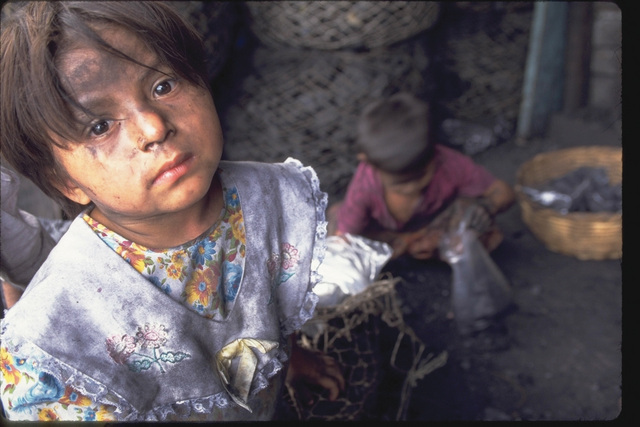
EL SALVADOR: Her face and clothes covered in charcoal dust, Norma Jorge Campos, four, cousin of Tonio, six, seated behind her filling small plastic bags with charcoal, stands in the market area where the family lives and works in San Salvador, the capital. (#4 IN SEQUENCE OF TEN)
In 1997, more than 311,000 Salvadorian children aged 10-19 many of them under 15 work, often in hazardous conditions. One who is even younger is six-year-old Tonio Jorge who, together with his four young cousins, works about 12 hours a day bagging and selling charcoal to help his widowed mother, Alicia, and grandmother, Merijita Jorge, 75, as well as an aunt and uncle. On average, the entire family makes US$4-5 a day. Sixteen years ago, early on in the 13-year civil war that displaced half a million people and devastated the country's economy, leaving 50 per cent of the population living in poverty, the Jorge family moved to San Salvador, the capital, from Panchimalco, their traditional indigenous village 17 km to the south. Salvadorian medical officials say their current work is one of the most hazardous, especially for children. Tonio and his cousins all suffer respiratory ailments from breathing charcoal dust. Like many working children, Tonio does not go to school. UNICEF is assisting the government to develop legislation to protect child rights, including the right to protection from hazardous labour, and is supporting relevant technical assistance and training for legal professionals, law enforcement officers, teachers and NGO personnel working with children at risk.
أعلنت الأمانة العامة لمجلس الوزراء، ، إحالة مشروع قانون حماية الطفل إلى مجلس النواب.
وقالت امانة مجلس الوزراء في بيان اطلعت عليه ( المراقب و الناس ) إن «مجلس الوزراء، أحال مشروع قانون حماية الطفل، الذي دققه مجلس الدولة، إلى مجلس النواب، استنادا إلى أحكام المادتين (61/ أولاً – 80/ثانيا) من الدستور».
وأضافت، أن «القانون يهدف إلى تأمين الحماية اللازمة للطفل من جميع أشكال العنف والقوة أو الإساءة البدنية أو النفسية أو الإهمال أو الاستغلال، ويحظر الاتجار بالطفل أو استرقاقه أو إكراهه على العمل أو استغلاله بأي شكل أو زجه في النزاعات المسلحة»، مبينة أن «القانون يهدف أيضا إلى توفير دور للحماية الاجتماعية، والنفسية، والصحية، والتربوية، والإيوائية للطفل الذي يعاني من تفكك أُسَري أو فقد رعاية الوالدين أو أحدهما لأي سبب كان وتأمين احتياجاته كافة».